
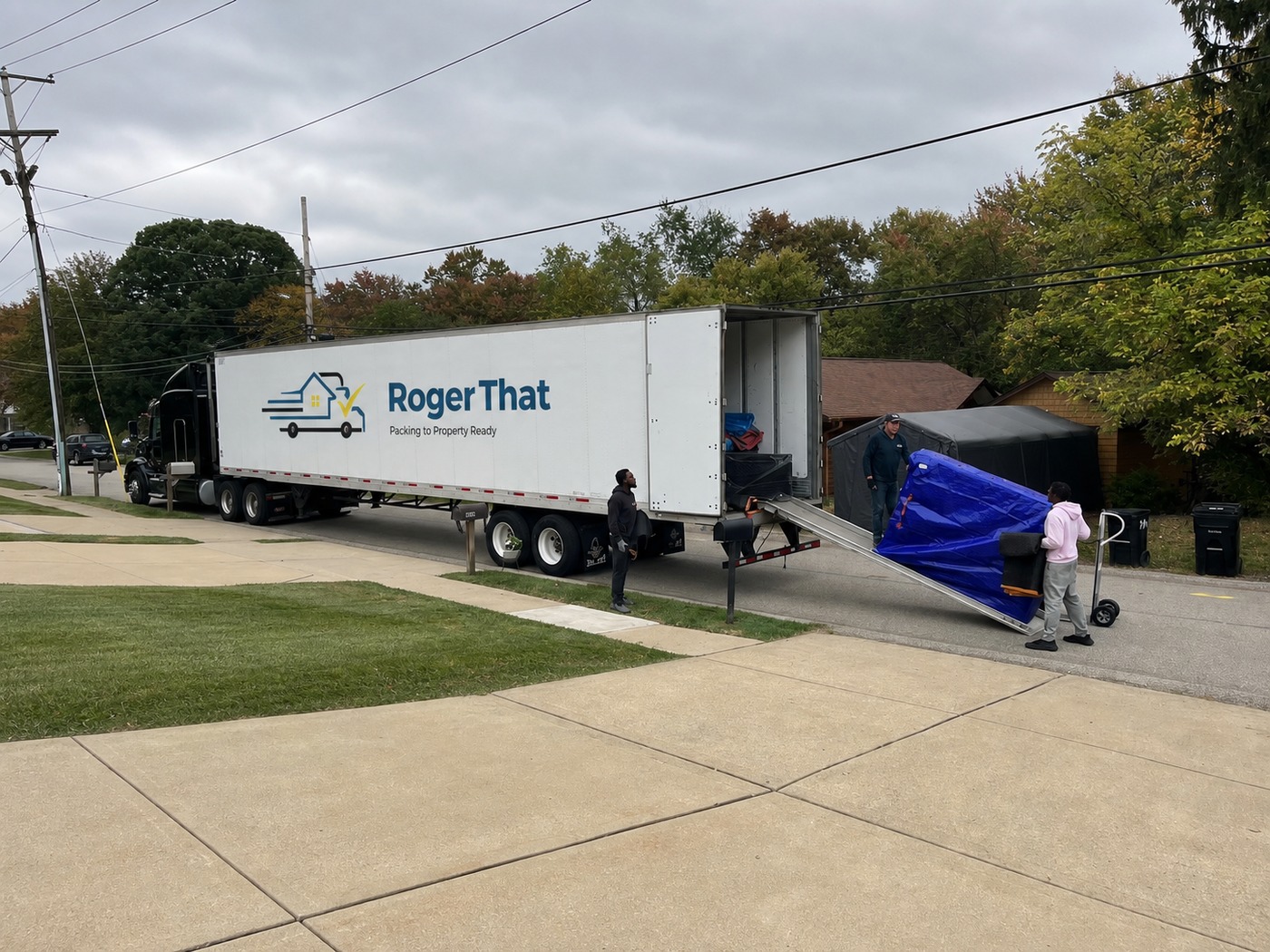
Somewhere in almost every garage is a propane tank, a shelf of half-used paint cans, and a gas can with an inch of fuel in it. On move day, all of it stays behind, and families who learn this while the truck is being loaded end up solving a disposal problem in the worst possible hour. The no-load list is not a company quirk. It is standard across the moving industry, and the reasons hold up.
Short answer
Movers cannot transport flammables, pressurized tanks, chemicals, or anything that can leak, ignite, or spoil in a hot closed truck. Perishable food and plants are also poor candidates, and documents, jewelry, and cash should stay with you by choice. Handle each category the week before: use up, give away, dispose properly, or load it into the family car.
Why the list exists
A moving truck's cargo box is sealed, unventilated, and hot in the sun, with the load shifting slightly for the whole drive. That environment turns minor hazards into real ones. A propane valve that seeps, a paint can with a loose lid, a battery that shorts against something metal: any of these puts the crew and the entire household's belongings at risk. So movers everywhere refuse the same categories, and a good crew will spot these items during loading and set them aside no matter how well they were packed.
The hazardous list, and the fix for each
Most of these items are easy to replace and annoying to transport even in a car, so the practical answer is usually disposal or giveaway rather than transport.
- Propane tanks: never truck cargo, even empty, since an empty tank still holds vapor. Exchange it at any tank-swap rack, give it to a neighbor, or buy a fresh one at the destination.
- Gasoline, kerosene, and lighter fluid: run mowers and trimmers dry before the move. Remaining fuel can go to a neighbor or a hazardous waste collection.
- Paint, stains, and solvents: give usable cans to neighbors or a community group, and take the rest to a household hazardous waste drop-off. Delaware's counties and the Delaware Solid Waste Authority run collection options for exactly this.
- Pool, lawn, and cleaning chemicals: same route. Do not mix part-full containers to save space.
- Ammunition and fireworks: these travel with the owner under applicable laws or get properly disposed of, never packed in household boxes.
- Loose batteries and portable propane cylinders for camp stoves: small enough to forget, still on the list. Car trunk or disposal.
Perishables and plants
Food that needs refrigeration cannot survive a truck, so the week before the move is for eating down the fridge and freezer. Unopened shelf-stable food can move fine in boxes, or it can go to a food drive if hauling cans is not worth it. Opened packages attract pests in transit and are better used or tossed.
Plants are a judgment call rather than a hard refusal, but the truck is rough on them. A dark cargo box in a Delaware summer will cook a houseplant on even a short local run. Move plants in the family car, watered a day ahead and shaded in transit. For a long-distance move, rehoming plants with friends is often kinder than the trip, and some states regulate plant entry anyway, which is one of the details worth raising early when planning a coordinated long-distance move.
Things movers could take but should not
Nothing stops a crew from loading a box of documents. The reason not to is simpler: if the one box containing passports, titles, birth certificates, and the checkbook is somewhere in a full truck, it is unavailable exactly when closing paperwork or an ID is needed. Documents, cash, jewelry, small electronics, prescription medications, and anything irreplaceable ride in the family car, in one marked container, assigned to one adult. This overlaps with the first-night kit, and the two can share a trunk.
Week-before disposal checklist
- Run outdoor equipment dry; no fuel in tanks on move day.
- Exchange or give away propane tanks, including the grill tank.
- Sort paint and chemicals: give away the usable, collect the rest for hazardous waste drop-off.
- Eat down the fridge and freezer; box only unopened shelf-stable food.
- Plan car transport for plants, or rehome them.
- Pull documents, jewelry, cash, and medications into the ride-along container.
- Ask the movers about anything questionable before move day, not during it.
When the leftovers are the problem
Sometimes the no-load pile reveals a bigger issue: a garage full of old chemicals, dead equipment, and things nobody wants to move anyway. That is a separate job from the move itself, and junk removal and donation coordination exists for it, with usable items routed to donation instead of the landfill. Questions about a specific item are welcome ahead of any local move, and the FAQ page covers the ones that come up most.
FAQ
Why won't movers transport propane tanks or gasoline?
A closed truck body gets hot, and fuels, propane, and other pressurized or flammable items can leak or ignite in that environment. The risk is to the crew and to everything else in the load, so these items are refused everywhere.
What should I do with leftover paint and household chemicals before a move?
Use them up, give them to neighbors, or take them to a household hazardous waste collection. Delaware residents can check their county's or the Delaware Solid Waste Authority's collection options for drop-off events.
Should important documents and jewelry go on the moving truck?
No. Documents, jewelry, cash, and small high-value items should travel with the family in a personal vehicle, in one marked container assigned to one adult.