
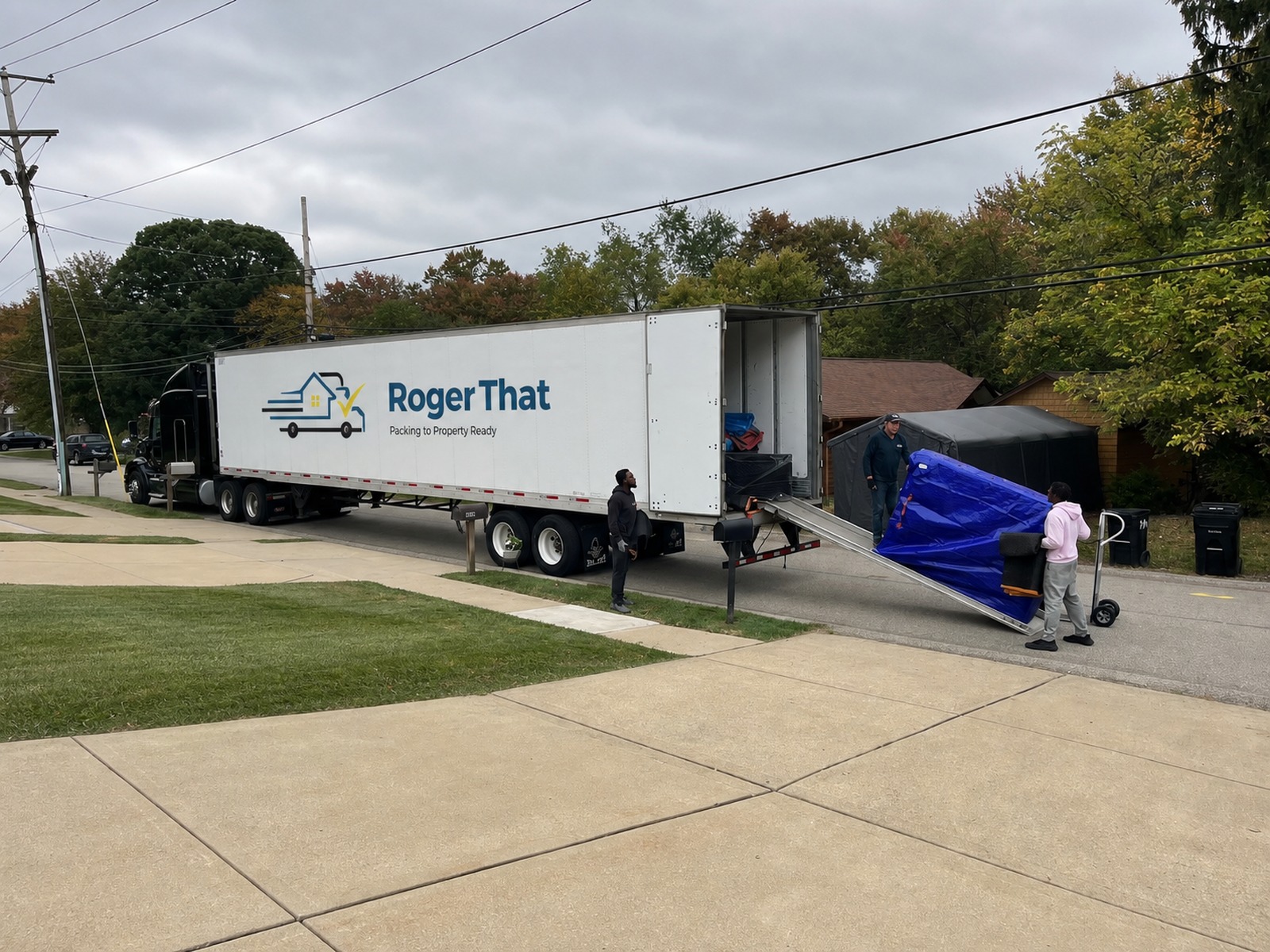
Dogs and cats read a move differently than people do. The boxes stack up for weeks, the furniture starts disappearing, and then one morning the front door stands open while strangers walk out with the couch. Some pets handle it fine. Plenty do not, and a stressed animal near an open door on the busiest day of the move is how pets get lost. The plan that prevents it takes about twenty minutes to set up.
Short answer
Before the crew arrives, set up one closed room with the pet's food, water, and bedding, and tape a sign on the door. The pet stays there through loading, travels in the family car, and arrives at the new house to a matching quiet room while unloading happens. Slow introductions after that, and old routines from day one.
The quiet room during loading
Pick the room the crew will need last or not at all. An empty bathroom is ideal for a cat; a cleared bedroom works for a dog. In goes the water bowl, the bed or a worn blanket, a litter box for cats, and a radio or fan for background noise. Then the door closes and a sign goes up: PET INSIDE, PLEASE KEEP CLOSED. Tell the crew lead too, at the same walkthrough where the do-not-load items get pointed out. Crews prop doors open all day by necessity, which is exactly why the one closed door has to be announced.
For animals that panic at noise and strangers, skip the quiet room and remove them from the property entirely. A day of boarding, a familiar friend's house, or a daycare visit costs less than an afternoon spent searching the neighborhood. Either way, update the pet's ID tag and microchip registration to the new address before move day, not after, because the highest-risk window for an escape is the move itself.
Travel is the family car, every time
Pets never ride in the moving truck. The cargo box is sealed and unventilated, and no crew will take a live animal in it. In the car, cats go in secure carriers that were left out for a week beforehand so the carrier stopped being a threat, and dogs ride crated or harnessed to a seat belt. Feed lightly a few hours before leaving rather than right before, bring water and a bowl, and leash dogs before any door opens at rest stops. An animal that never bolts at home will bolt in a strange parking lot.
Delaware summers are the extra hazard
Local moves here often happen in hot, humid weather, and pets handle heat worse than people. Never leave an animal in a parked car during the loading shuffle, even briefly with windows cracked; the interior heats fast enough to be dangerous while everyone is distracted. Start the car and get the air conditioning running before the carrier goes in. At both houses, keep water down all day and watch dogs for heavy panting or drooling, since a nervous dog pants more anyway and the signs blend together. If the timeline allows, load during morning hours, which is easier on the crew and the animals alike.
Records and the first weeks in the new home
Before leaving the old vet, get a copy of the pet's records and any current prescriptions, and carry them in the ride-along documents folder rather than in a box. Then, at the new house, resist the urge to give the animal the full run of the place. Cats do better started in a single room with their litter box, food, and familiar-smelling bedding, expanding to the rest of the house over several days once they settle. Dogs want the old schedule more than the old house: same walk times, same feeding times, starting the first morning. Walk the fence line before any off-leash yard time, since previous owners' gaps are found by dogs first. Most animals settle within a few weeks. A pet still refusing food or hiding after that deserves a call to the new vet, which is a good reason to have picked one before the move instead of during an emergency.
Pet move-day checklist
- Quiet room stocked with food, water, bedding, and litter before the crew arrives.
- Sign on the door and a verbal heads-up to the crew lead.
- ID tags and microchip registration updated to the new address.
- Vet records and medications in the ride-along folder.
- Carrier out and familiar a week ahead; harness or crate ready for dogs.
- Car cooled before animals load; water available all day.
- Matching quiet room set up first at the new house.
- Old feeding and walking schedule kept from day one.
Make the pet part of the moving plan
A pet plan works best when the crew knows about it, so mention animals when booking a local move, especially which room will be closed during loading. Families juggling kids, pets, and a packing deadline at the same time can hand the boxes to packing and unpacking and keep their attention on the living members of the household. More family-move planning lives on the moving help for families page.
FAQ
Where should pets be during moving day?
In one closed room with food, water, bedding, and a sign on the door telling the crew not to open it. An empty bathroom or cleared bedroom works, and boarding or a friend's house is even better for anxious animals.
How should cats and dogs travel to the new home?
In the family car, never the moving truck. Cats go in secure carriers, dogs ride harnessed or crated, and on hot days the car needs to be running with air conditioning before animals are loaded.
How long does it take pets to adjust to a new house?
Days to a few weeks depending on the animal. Cats do best starting in one room with familiar items, while dogs settle faster when walks and feeding stay on the old schedule from the first day.