
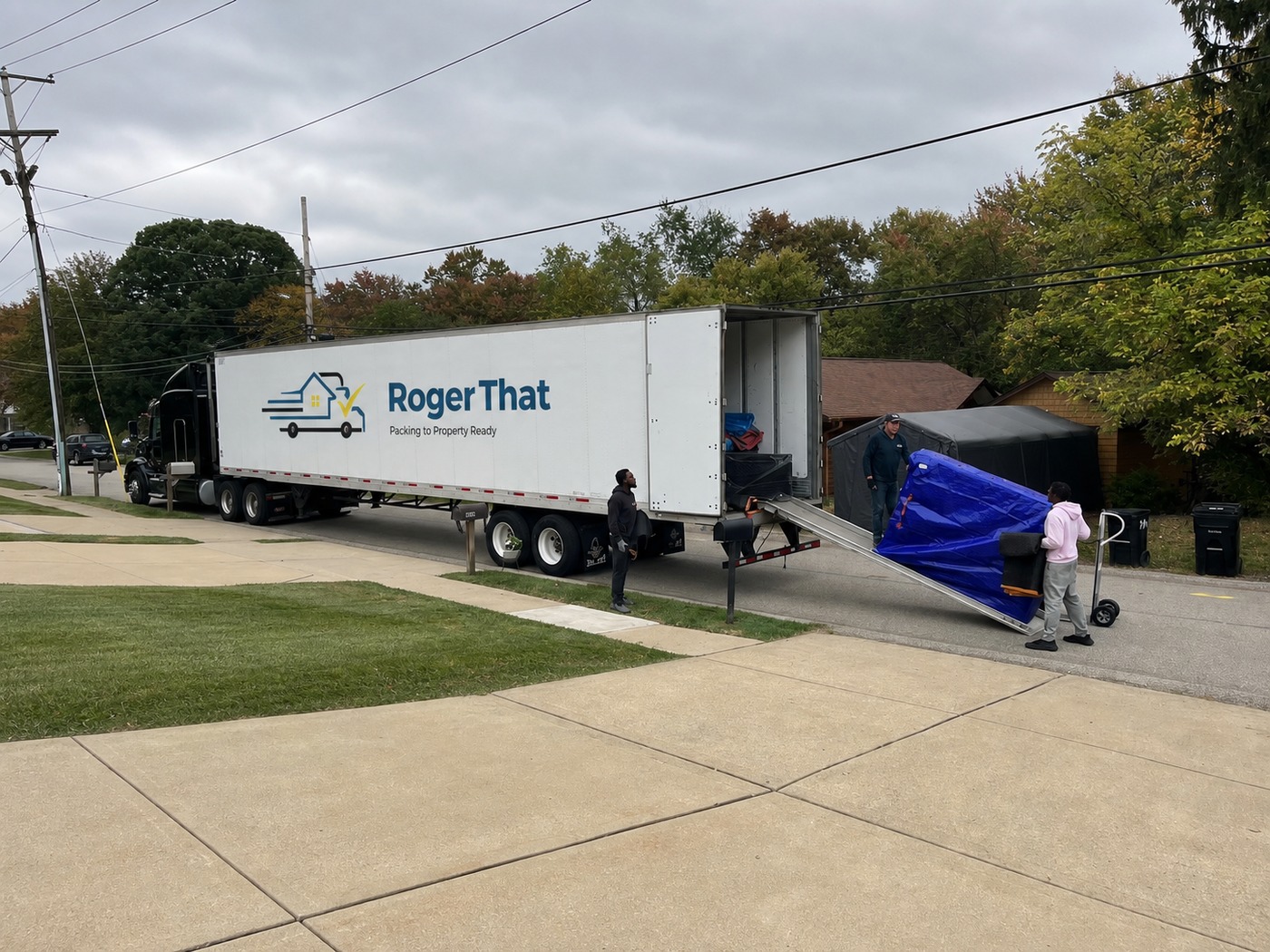
A local move forgives mistakes. Forget something, and you drive back for it. A long-distance move offers no such grace. Once the truck leaves for another state, every decision about what went on it, what stayed with you, and how the two ends were scheduled is locked in. That is why the checklist for a long-distance move is less about boxes and more about decisions.
Short answer
For a long-distance move, decide early what is worth transporting, get the pickup and delivery windows in writing, keep documents, valuables, medications, and a week of essentials with you, and name one point of contact for each end. Roger That coordinates long-distance moves out of Delaware and back home to it.
The inventory decision comes first
Distance changes the math on what to bring. On a local move, hauling an extra bookcase costs almost nothing. Over hundreds of miles, everything on the truck has to earn its place, because a long-distance estimate is driven by the space and weight of the shipment and how far it travels. That is not an argument for leaving your life behind. It is an argument for making the donate-or-move call before packing, item by item, instead of defaulting to bringing everything. Furniture near the end of its life, appliances that may not fit the new home, and boxes unopened since the last move are the usual candidates for a donation run or clean-out before loading day.
Timing works differently over distance
A local move happens in a day. A long-distance move is scheduled in windows: a pickup day or two on the front end and a delivery window at the destination that can span several days, depending on distance and routing. Ask for both windows in writing and plan as if delivery lands late in the window. That assumption drives real decisions, like whether the first nights need an air mattress, when the utilities should turn on, and whether short-term storage has to bridge a gap between leaving one home and taking possession of the next. If a gap looks likely, arrange the storage in advance rather than discovering the need during the move itself.
What travels with you, not the truck
Some things should never go in the shipment, either because you will need them before it arrives or because they are too hard to replace. Pack the car, or your luggage, as if the truck were a week behind you.
Photograph what does go on the truck. A quick phone photo of each room before packing, and of anything valuable as it is wrapped, gives you a record of condition and a reminder of what you own. Number the boxes and keep a simple list of what each number holds. On a local move that feels like overkill. When a shipment arrives a week later and hundreds of miles away, the list is how you know everything made it.
Keep-with-you checklist
- Identification, passports, and the folder of moving paperwork and contracts.
- Medications, glasses, and anything medical that cannot wait for the truck.
- Jewelry, small heirlooms, cash, and other hard-to-replace valuables.
- Laptops, hard drives, and every charger the family uses daily.
- A week of clothes and toiletries per person.
- Comfort items for kids, and pet food for the trip plus the first days after.
- Basic tools, paper towels, and a shower curtain for the first night.
Coordination is the real difference
The hardest part of a long-distance move is that the two ends stop being one job. Confirm access at the destination the same way you would at home: parking for a large truck, elevator reservations, and any certificate or registration the building requires from the mover. Decide who meets the truck at delivery if you cannot be there yourself, and make sure that person has the authority to make placement decisions. Keep a single phone contact for the move overall, so a change on either end travels through one conversation instead of a chain of them.
Leaving Delaware, or coming home
Roger That coordinates long-distance moves for families leaving Delaware and for the ones moving back. The local pieces can ride on the same plan: packing and unpacking on the Delaware end, and storage coordination through partner facilities when the dates do not line up. Once the destination is set, a free estimate starts the scheduling, and the earlier the windows are locked in, the more choice there is on dates.
FAQ
What drives the cost of a long-distance move?
Mainly the space and weight of the shipment, the distance, and added services like packing or storage. Reducing what you bring before packing is the most effective way to change the estimate.
What should you keep with you instead of putting on the truck?
Documents, medications, valuables, daily-use electronics, and about a week of clothes and essentials per person. Plan as if delivery lands at the late end of its window.
How is delivery scheduled on a long-distance move?
Usually as a window that can span several days rather than a single guaranteed date. Get the window in writing, then set up utilities and sleeping arrangements assuming a later arrival.