
There is a box in every move that teaches the same lesson. It is a large carton somebody filled with books, and it either splits at the bottom seam in the driveway or sits in the truck as a fifty-minute argument about whose turn it is to lift it. Dense items follow different rules than the rest of the house, and the rules are mostly about restraint: smaller boxes, firmer limits, and no exceptions because the box "still has room."
Short answer
Pack books and other dense items only in small boxes, keep each box light enough for one person to carry comfortably, and load books flat or spine down, never spine up. Tape the bottom seam with at least two overlapping strips, because a heavy box is only as strong as the tape holding its floor.
The small-box rule and why weight wins
Cardboard has limits and so do backs. A small book box, roughly 1.5 cubic feet, filled with hardcovers already sits at the top of what most people can carry down stairs safely, somewhere in the forty-to-fifty-pound range. Fill a medium box with the same books and it becomes a hazard; fill a large one and it becomes a joke. The "still has room" instinct is the enemy here. When a small box of dense items reaches its weight before it reaches its brim, top it off with something light, such as paperbacks over hardcovers or a folded blanket, and close it.
Taping matters more on heavy boxes than anywhere else. The bottom gets two or three overlapping strips of real packing tape across the seam, plus a strip along each edge where the flaps meet the walls. Masking tape and thin bargain-bin tape release under load, and they always pick the staircase to do it.
Spine down, never spine up
Books have a grain to how they take pressure. Laid flat on their backs, they stack solidly and carry weight well. Standing spine down, they rest on their strongest edge. Packed spine up, gravity pulls the text block away from the binding for the entire ride, and a valued hardcover can arrive with its pages sagging loose. So the two good positions are flat or spine down, packed snug so rows cannot lean, with paper filling any gap at the top of the box.
For books you could not simply rebuy, signed copies, family bibles, anything fragile with age, wrap them individually in paper first and lay them flat in the middle of the box, padded on all sides. Extremely valuable volumes deserve to ride in your own car.
Records, media, and other dense collections
Vinyl records follow plate logic: they travel on edge, packed vertically and snug, never in flat stacks that put the whole pile's weight on the bottom sleeve. Small boxes again, both for weight and because a tight fit keeps records from leaning. CDs, DVDs, and video games are less delicate but just as dense, so the same small-box, weight-first discipline applies. Board games stack flat with paper between boxes to keep lids from sliding open.
Photo albums and document boxes are heavy, irreplaceable, or both. Pack the replaceable ones like books. Carry the irreplaceable ones, along with passports, deeds, and files, in your own vehicle where they never leave your sight.
Tools without the drama
Hand tools can usually stay in a latching toolbox, with rags or paper stuffed around loose items so a hundred small pieces stop sliding at every turn. Heavy hand tools without a box get wrapped and packed in small cartons, sharp edges papered and labeled the way knives are. Power tools travel best with batteries removed and packed beside them, and cases latched or taped shut.
The hard line is fuel and pressure. Gasoline, propane tanks, kerosene, and most aerosols and solvents cannot go on a moving truck, full stop. Run mowers and trimmers dry ahead of move day, give away the half-full gas can, and plan to transport grill tanks yourself or replace them after the move.
Heavy-box checklist
- Small boxes only for books, records, tools, and media.
- Weight capped at a comfortable one-person stair carry.
- Bottom seam taped with two or three overlapping strips.
- Books flat or spine down, packed snug, gaps papered.
- Records vertical and tight, never flat-stacked.
- Batteries out of power tools, cases latched.
- Fuel, propane, and flammables handled separately, never on the truck.
Let the heavy stuff be someone else's job
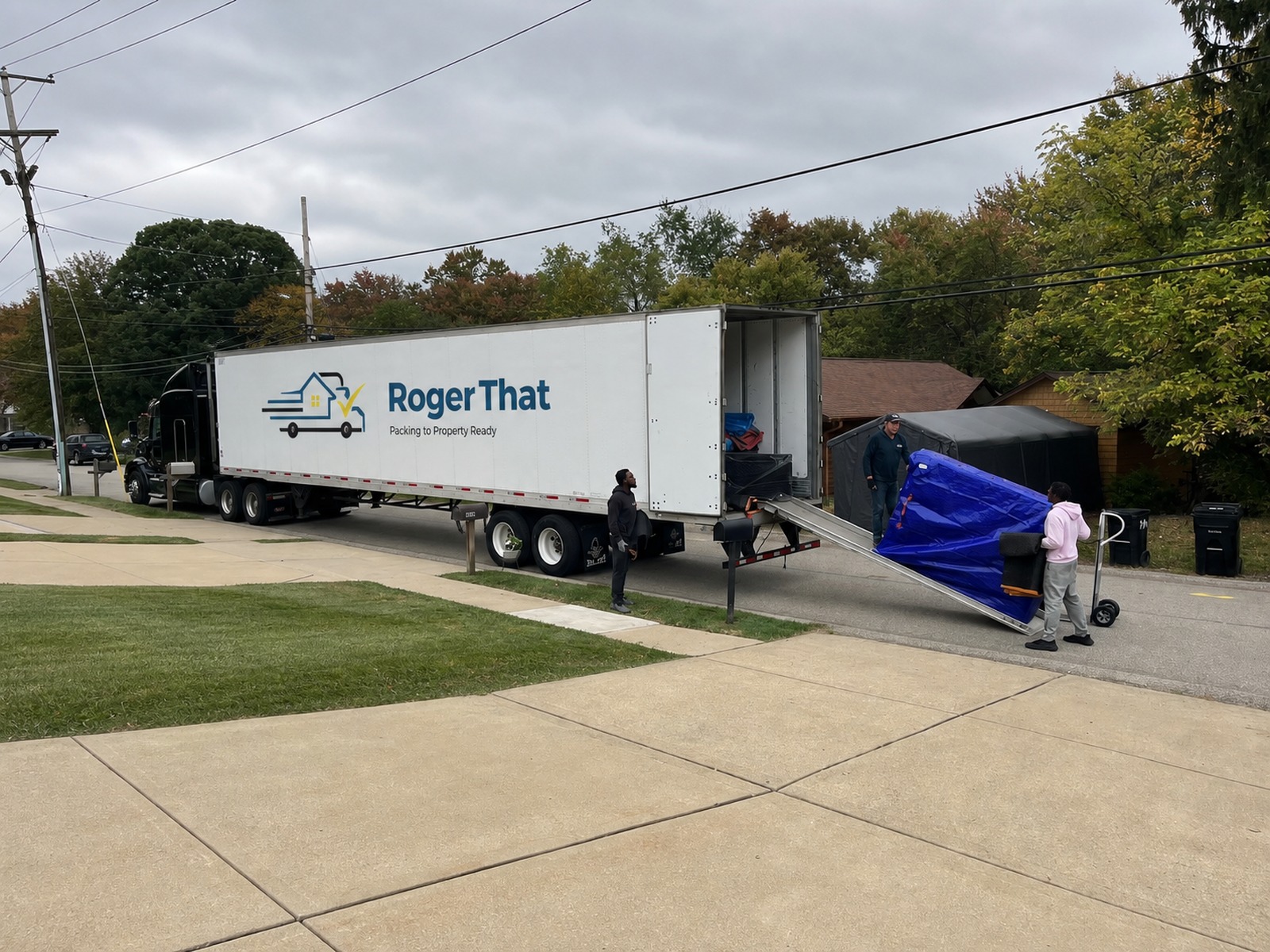
Dense boxes are exactly where a crew earns its keep, since carrying fifty small heavy boxes well is a fitness plan nobody asked for. Roger That handles book collections, garages, and workshop tools as part of local moving, and packing help covers the boxing itself. Collections headed somewhere other than the new house can be folded into storage coordination so the heaviest boxes are only ever carried once.
FAQ
What size box is right for books?
Small boxes only, around 1.5 cubic feet. A small box filled with books already reaches the practical weight limit for safe carrying, and anything larger becomes a box that fails or hurts someone.
How should books be positioned in a box?
Flat on their backs or spine down. Spine up lets the pages sag away from the binding and can pull a book apart over a bumpy ride, and packing them fore-edge down does the same damage.
Can tools be moved in their toolbox?
Mostly yes, if the toolbox latches shut and loose items inside are wrapped or padded so they cannot slide. Fuel, propane, and other flammables cannot go on the truck at all and need a separate plan.