
Delaware families clearing a home almost always want the usable things to go somewhere useful. The instinct is right. The execution is where it falls apart: boxes of maybe-donations sit in a garage for months, or a carload gets driven to a thrift store that declines half of it at the door. Donation works when you know what actually qualifies, where it is going, and when the run happens.
Short answer
Donate items that are clean, complete, and working, and be honest about the rest. Roger That routes usable donations to God's Way Thrift Stores, a Delaware nonprofit with locations in Milford, North Dover, and Rehoboth Beach, and can fold donation runs into a move or clean-out so they are not a separate errand.
What donates well
Thrift stores resell what they receive, so the standard is retail, not charity. Items that move: clean clothing and linens, working small appliances, complete cookware and dish sets, books, framed art and decor, lamps, tools, and sturdy furniture without odors or damage. Seasonal items do fine too. A working fan donates in June, and holiday decorations donate any time of year because stores hold them.
The single most useful test is to imagine the item on a store shelf tomorrow. Would a stranger pay for it as it sits, without cleaning or repair? If yes, box it. If you find yourself explaining why it is still good, it probably is not a donation. Plug in anything electric before you box it. A lamp that flickers or a mixer that grinds does not get more functional in a donation bin, and testing takes seconds while you are still at the house.
What gets declined, and why
Certain categories are declined so consistently that it saves everyone time to know them up front. Stained, torn, or smoke-saturated upholstery. Mattresses, in most cases. Broken electronics and appliances that need repair. Incomplete sets with missing pieces. Cribs, car seats, and other child-safety items that stores cannot verify against recalls. Old tube televisions. Opened food, opened cosmetics, and expired anything.
None of this is fussiness. A thrift store that accepts unsellable goods pays to dispose of them, which takes money away from whatever the store exists to fund. Sorting honestly at the house is a genuine part of the donation.
Where it goes: God's Way Thrift Stores
Roger That routes usable donated items to God's Way Thrift Stores, run by God's Way Ministries of Delaware, a nonprofit thrift operation with stores in Milford, North Dover, and Rehoboth Beach. Their stores resell furniture, clothing, books, electronics, and home goods, and the operation supports community programs. Having a standing destination matters more than it sounds: the donation load leaves the house with somewhere specific to go, instead of riding around in a trunk while someone figures it out.
If your family has a preferred church, charity, or cause, that works too. Name it during scoping and the donation load can be directed there instead, provided they accept the items involved.
Fold the donation run into the job
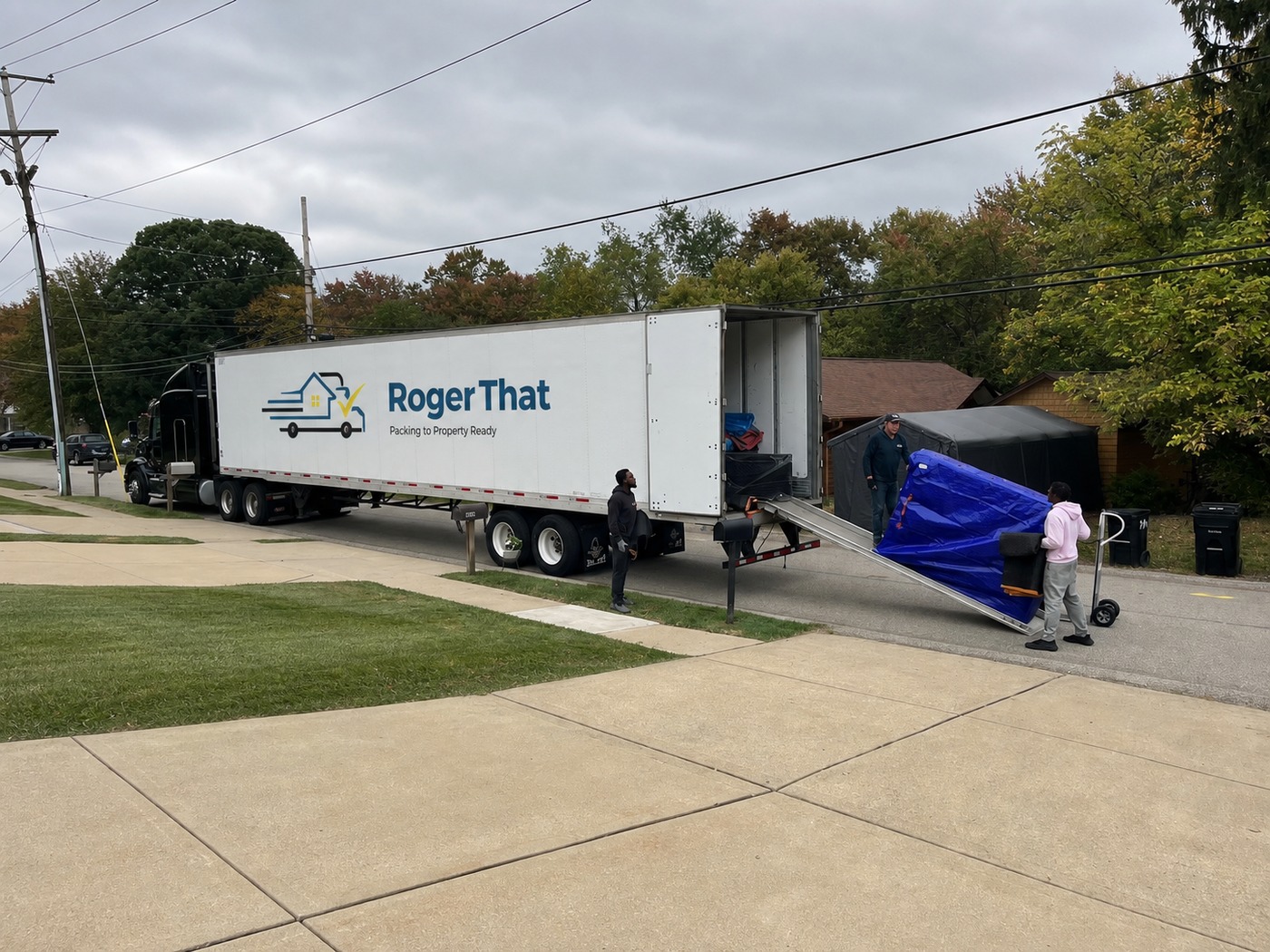
The donation trip that never happens is the one scheduled for later. The version that works is built into the move or clean-out itself: donation items are marked before the crew arrives, loaded separately from the household goods, and dropped as part of the same day's routing. One job, every item leaving in its correct direction. Timing matters inside a clean-out too. Donation candidates should go out while the house still has clear pathways, because the last days of a clean-out are dusty and crowded, and that is hard on anything upholstered.
Donation prep checklist
- Sort with the store-shelf test: sellable today, as it sits.
- Box donations by category and label the boxes clearly.
- Keep donation boxes physically separate from pack-and-move items.
- Tag donation furniture with painter's tape so nothing is loaded wrong.
- Name a preferred destination during scoping, or use the God's Way routing.
- Ask for receipts if the donation is part of an estate.
When donation is part of a bigger job
Most donation loads in this area come out of a transition: a downsizing, an estate, a house going on the market. Roger That handles the donation leg inside junk removal and donation coordination, and builds the same routing into estate clean-outs and senior moves so usable goods get a second life without the family making a dozen trips.
FAQ
What household items donate well?
Clean clothing, working small appliances, complete cookware sets, books, decor, and sturdy odor-free furniture. The test is whether a stranger would buy the item today in its current condition.
Where can Roger That route donated items?
Usable donations can be routed to God's Way Thrift Stores, a Delaware nonprofit thrift operation with locations in Milford, North Dover, and Rehoboth Beach.
Can donations be handled during the move itself?
Yes. Marking donation items ahead of time lets the crew load them separately and route them during the same job, which is easier than making trips with a sedan afterward.